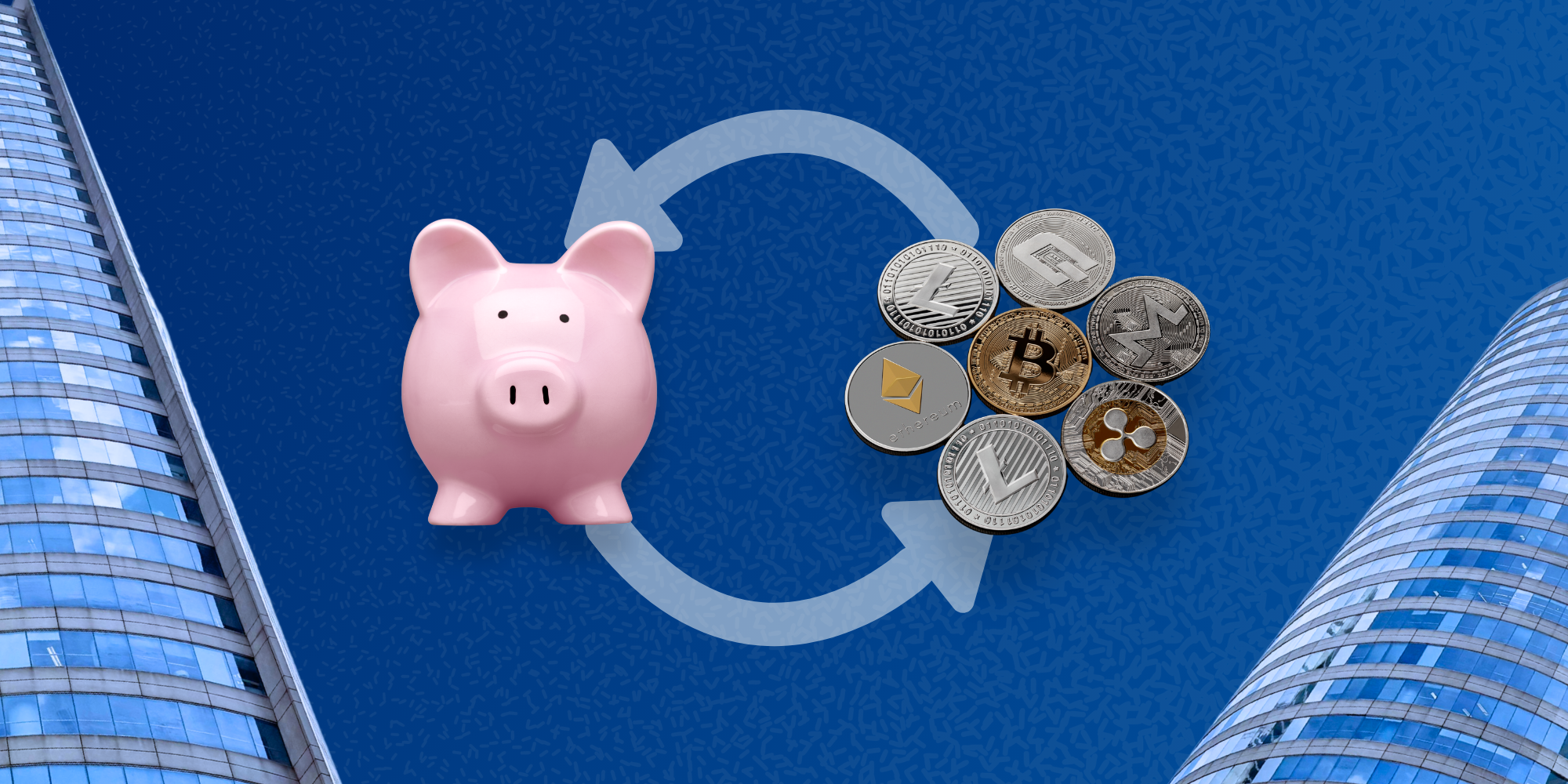
For decades, ACH has quietly powered how America moves money: payroll, vendor payments, mortgages, insurance premiums, B2B invoices. It’s reliable, cost-effective, and deeply embedded in our financial system. But today, CFOs, treasurers, and founders are asking a new question:
What happens when we can route the same payment over ACH, real-time rails, or crypto intelligently, in real time? isn’t a “kill ACH” story. It’s about orchestrating the right rail for the right payment at the right moment.
The Problem: Good Enough Isn’t Good Anymore
Traditional ACH works, but it wasn’t designed for:
- 24/7 global operations
Cutoff times, weekends, and holidays still matter. - Instant settlement expectations
Your customers live in a streaming world; they don’t understand “T+2.” - Real-time risk decisions
Fraud, sanctions, and liquidity risks now move at machine .

The result is friction
delayed funds, reconciliation headaches, needless FX and transaction costs, and working-capital trapped in transit.
The Shift: Multiple Rails, One Decision Engine
We’re moving toward an environment where a single payment instruction can be routed across:
- ACH – Low cost, great for predictable and batch flows.
- Real-time rails – RTP, FedNow, SEPA Instant for time-sensitive payments.
- Card and wallets – For consumer and merchant acceptance use cases.
- Crypto / tokenized rails – Stablecoins, tokenized deposits, or on-chain settlement for cross-border and programmable flows.
The innovation isn’t just adding choices; it’s building an intelligent routing layer that can answer, in microseconds:

“Should this go over ACH, real-time, or crypto and why?”

RESULTS
Replacing ACH with Crypto (and Back Again)
Challenge
A mid-market US-based SaaS company is paying freelancers, engineers, and partners across Europe and LatAm. Historically, they used:
- ACH to send USD to their US bank.
- Traditional cross-border wires and correspondent banks to convert to local currency.
- Settlement times ranging from 2–5 days, with high FX spreads and opaque fees.
Pain points:
- Treasury has poor visibility on when funds actually land.
- FX costs and correspondent fees erode margins.
- Support team spends hours answering: “Where is my payment?”
Solution
Step 1 | Crypto Rail Pilot
The company partners with a regulated fintech that offers:
- On-ramp from USD deposits.
- Conversion into a regulated stablecoin or tokenized USD.
- On-chain transfers to a local partner or exchange.
- Off-ramp to local currency accounts.
What changes:
- Settlement time drops from days to minutes or hours for many corridors.
- Fees fall as correspondent hops are reduced.
- Transparency improves—treasury and recipients can see when the transaction is broadcast and confirmed.
Step 2 | Smart Rail Selection (ACH ↔ Crypto)
Once the crypto rail is proven, the company doesn’t “turn off” ACH. Instead, they introduce rules-based routing:
- Under $X and domestic? Route via same-day or next-day ACH for lowest cost.
- High-value payment with hard deadline? Use real-time rails where available.
- Cross-border payout to a market with strong on/off-ramps? Use the stablecoin rail for speed and transparency.
- Compliance or counterparty constraint? Fall back to ACH or wire.
Outcome
The result is a hybrid payment strategy where:
ACH remains the backbone for domestic, predictable flows, while crypto rails become a strategic option for cross-border speed and resilience.
What This Looks Like in Practice

Imagine a single dashboard where your team can:
- Upload a payables file (just like today).
- Tag urgency, amount, and geography.
- Let an AI/analytics engine score each payment on cost, speed, and risk.
- Automatically route via:
- Your AP clerk sees one interface.
- Your treasurer sees liquidity and risk in real time.
- Your customer or vendor just sees that they “got paid faster.”
Governance Still Matters: ACH and NACHA Compliance
As we modernize rails, governance can’t be an afterthought. ACH remains governed by NACHA rules, and anyone originating ACH credits or debits must be properly trained, audited, and aligned with NACHA operating guidelines.
Bringing in crypto or tokenized rails doesn’t remove that obligation, but instead adds new layers:
- BSA/AML/KYC and sanctions (on-chain and off-chain).
- Wallet whitelisting and transaction monitoring.
- Clear policies for when to use ACH vs. real-time vs. crypto.
The winners will be the institutions and corporations that:
- Treat ACH, real-time, and crypto as one coordinated strategy, not competing religions.
- Invest in NACHA training and operating discipline while building new-rail expertise.
- Use data and AI to continuously tune rail selection and minimize total cost of payment.
THE BOTTOM LINE
We’re not replacing ACH. We’re re-positioning it.
ACH becomes the steady, low-cost backbone. Real-time rails handle urgency. Crypto and tokenized deposits unlock 24/7, global, programmable settlement.
The real revolution is building the intelligent payment brain that can choose for you. That’s where the next wave of value will be created not only for banks and fintechs, but for every business that moves money.

About the Author
John is a banking and fintech transformation leader who has scaled complex institutions and platforms across payments, wealth, and core banking. John has led regulated launches (including the first OCC-approved national trust bank purpose-built for alternative investment funds), modernized global payments and core platforms, and driven enterprise turnarounds under OCC/FDIC/NYDFS oversight. His experience spans COO/CIO/CEO roles, with accountability for multi-billion-dollar P&Ls, large global teams, and end-to-end risk, operations, and technology. He partners with boards and regulators to remediate issues, strengthen governance, and position organizations for sustainable growth and investor confidence.
To learn more, connect with John at jzazzera@solomonedwards.com